



If you've been scrolling through modern bathroom designs lately, you've probably noticed a dramatic shift: walls are disappearing, showers are going curbless, and the entire bathroom is becoming one open, water‑friendly space. It's called the wet room (or open shower layout), and it's quickly becoming a favorite among homeowners who love a spa‑like, minimalist aesthetic.
But here's the reality check many people overlook: in a true wet room, water doesn't stay neatly inside a shower enclosure. Splashes, drips, and even gentle puddles can reach every corner of the floor. That's a nightmare for a traditional bathroom vanity – especially one that sits directly on the ground.
So how do you embrace this gorgeous trend without watching your vanity swell, warp, or grow mold within a year? Let's break it down.
The Hidden Danger of an Open Shower Layout for Your Vanity
In a conventional bathroom, your vanity lives in the "dry zone," well away from daily spray. In a wet room, the entire floor is designed to slope gently toward a central drain – water can flow anywhere, and that includes under your cabinet.
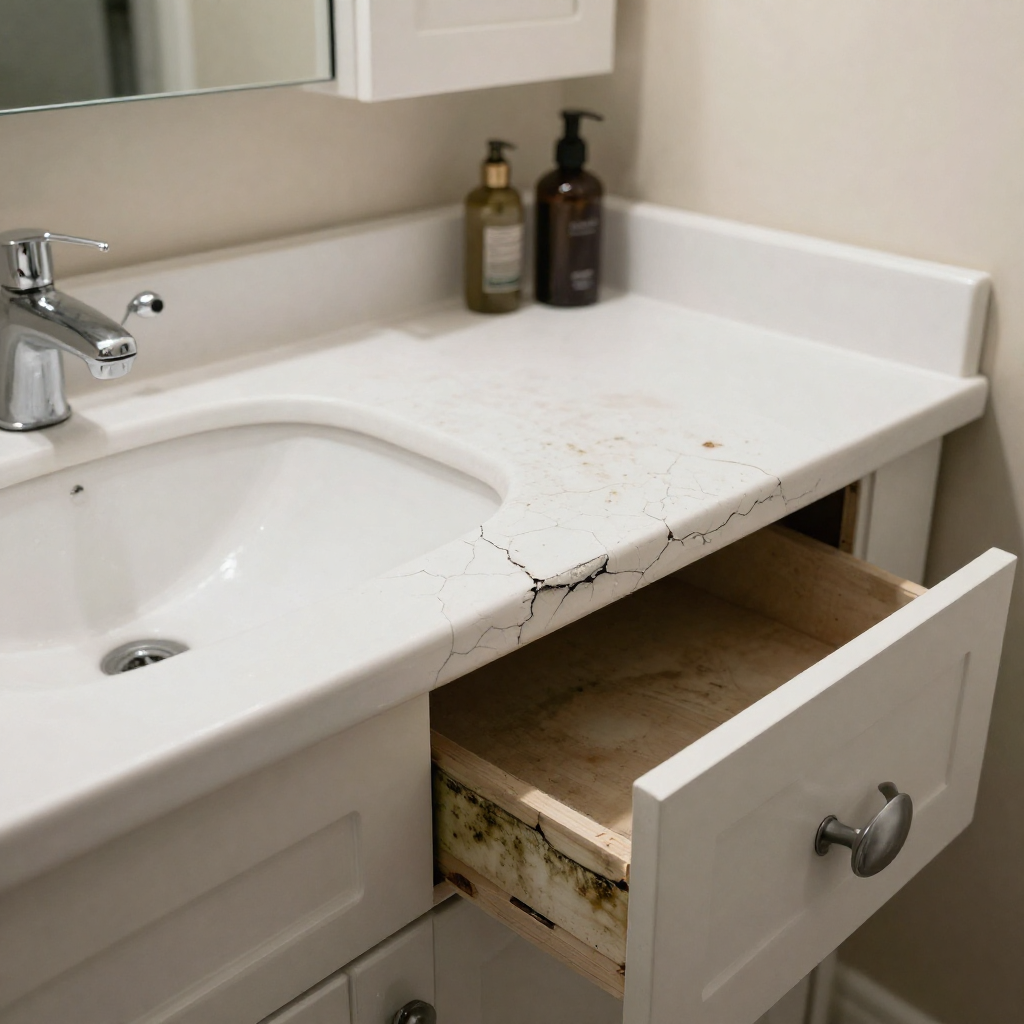
The typical vanity with wooden legs or a solid toe kick will absorb moisture from below. Over time, you'll notice:
- Swollen bottom edges and peeling veneer
- Mold or mildew hidden behind the front panel
- Doors that no longer close properly
- A musty smell that won't go away
None of this is inevitable. With the right vanity choice and a few smart design decisions, you can have that seamless open‑shower look and worry‑free durability.
The Solution: Floating Vanities (Wall‑Mounted)
The single most effective way to protect a vanity in a wet room is to lift it off the floor. Wall‑mounted (floating) vanities create a clean gap underneath that allows water to flow freely to the drain without ever touching the cabinet.
Why this matters for your wet room:
- No direct water contact – Even if water runs across the entire floor, it never soaks into the bottom of your vanity.
- Easy cleaning – Simply wipe or rinse underneath. No trapped dirt, hair, or moisture.
- Visual openness – A floating vanity reinforces the airy, modern feel of a curbless shower layout.
Not every floating vanity is built equally, though. In a high‑humidity, splash‑heavy environment, you need materials and construction that go beyond standard "water resistant."
What to Look for in a Wet‑Room‑Ready Vanity
When shopping for a vanity to survive an open shower layout, focus on three things:
1. Truly Waterproof or Marine‑Grade Materials
Ordinary particleboard will fail quickly. Look for high‑density MDF with a sealed surface, or better yet, a frame made from multi‑layer, moisture‑blocking engineered wood. The key is edge sealing – any exposed raw edge is an invitation for moisture to wick inside.
2. Stainless Steel or Coated Hardware
Hinges and drawer slides are often the first to rust. In a wet room, all hardware should be stainless steel or have a high‑quality anti‑corrosion coating.
3. Installation That Leaves Room for Drainage
Your contractor must leave at least 6–8 inches of clearance below the vanity. This allows water to flow unimpeded and air to circulate, drying out any occasional splashes.
Material Matters: Why Premium Build Quality Gives You Peace of Mind
Not all MDF is created equal. Budget vanities often use low‑density fiberboard with cheap melamine wrapping. When moisture finds even a pinhole, the core swells like cardboard.
For a wet room, you want cabinets made from premium moisture‑resistant engineered wood with full PVC edge banding or a baked‑on finish that seals every seam. For example, Eclife Premier's Modish series uses a multi‑layer water‑proofed MDF frame combined with soft‑closing stainless steel hinges – exactly the kind of construction that handles humidity with ease.
Right now, Modish wall‑mounted vanities are part of a special promotion (you can see the deals here), making it easier to invest in wet‑room‑ready quality without blowing your budget.
Design Inspiration: Making a Floating Vanity Shine in Your Wet Room
A floating vanity doesn't just perform – it elevates the entire bathroom aesthetic. Pair it with:
- A large backlit mirror to enhance the open feel
- Floor tiles that run continuously from the shower to the vanity wall (no thresholds)
- A wall‑mounted faucet to keep countertops uncluttered and easy to wipe
See real‑life examples of floating vanities in modern, open layouts at Eclife's Inspiration Gallery. You'll find curbless showers, wet room setups, and creative ways homeowners have kept their vanities safe without sacrificing style.
The Bottom Line
The wet room trend is not a passing fad – it's a response to our love of clean lines, accessibility, and spa‑like luxury. But to enjoy it for years, you need a vanity that's designed to stay dry even when the floor gets wet. A wall‑mounted, moisture‑resistant vanity is non‑negotiable.
Choose quality materials, seal every edge, and give your vanity some breathing room underneath. Then go ahead – enjoy that open shower layout without a single worry about swollen wood or hidden mold.
*This guide is for informational purposes. Always consult a professional contractor for wet room construction and waterproofing.