



If you've spent any time on Reddit's home renovation communities this summer, you've noticed a pattern. Homeowners aren't just sharing pretty "after" photos anymore—they're dissecting their regrets, warning others about hidden costs, and debating material choices with the intensity of a courtroom drama.

From a homeowner who spent nine months DIY-ing a bathroom while his wife was pregnant, to another who discovered a gaping hole under their old vanity, the conversations reveal what really matters in a bathroom remodel. Here are five lessons from the front lines of summer 2026 renovations—and how to apply them to your own project.
Lesson 1: Wood vs. Marble—The Debate That Won't Die
A recent thread on r/bathrooms captured the dilemma perfectly: "Can't decide between wood or marble countertop". The responses were passionate, practical, and occasionally brutal.

The case against wood: One commenter warned that a single drop of water can cause permanent damage to wood countertops, strongly recommending marble or quartz instead. Wood requires frequent sealing and can absorb liquids and bacteria without constant care.
The case against marble: Natural marble is softer and more porous than granite, showing less resistance to acids and staining cosmetics. It etches easily and demands constant maintenance.
The Reddit verdict: Homeowners want the warmth of wood and the durability of stone—but they don't want to choose. This is precisely why engineered materials like quartz and sintered stone (often called "porcelain/ceramic" countertops) are gaining traction. They offer the visual appeal of natural materials without the maintenance headaches.
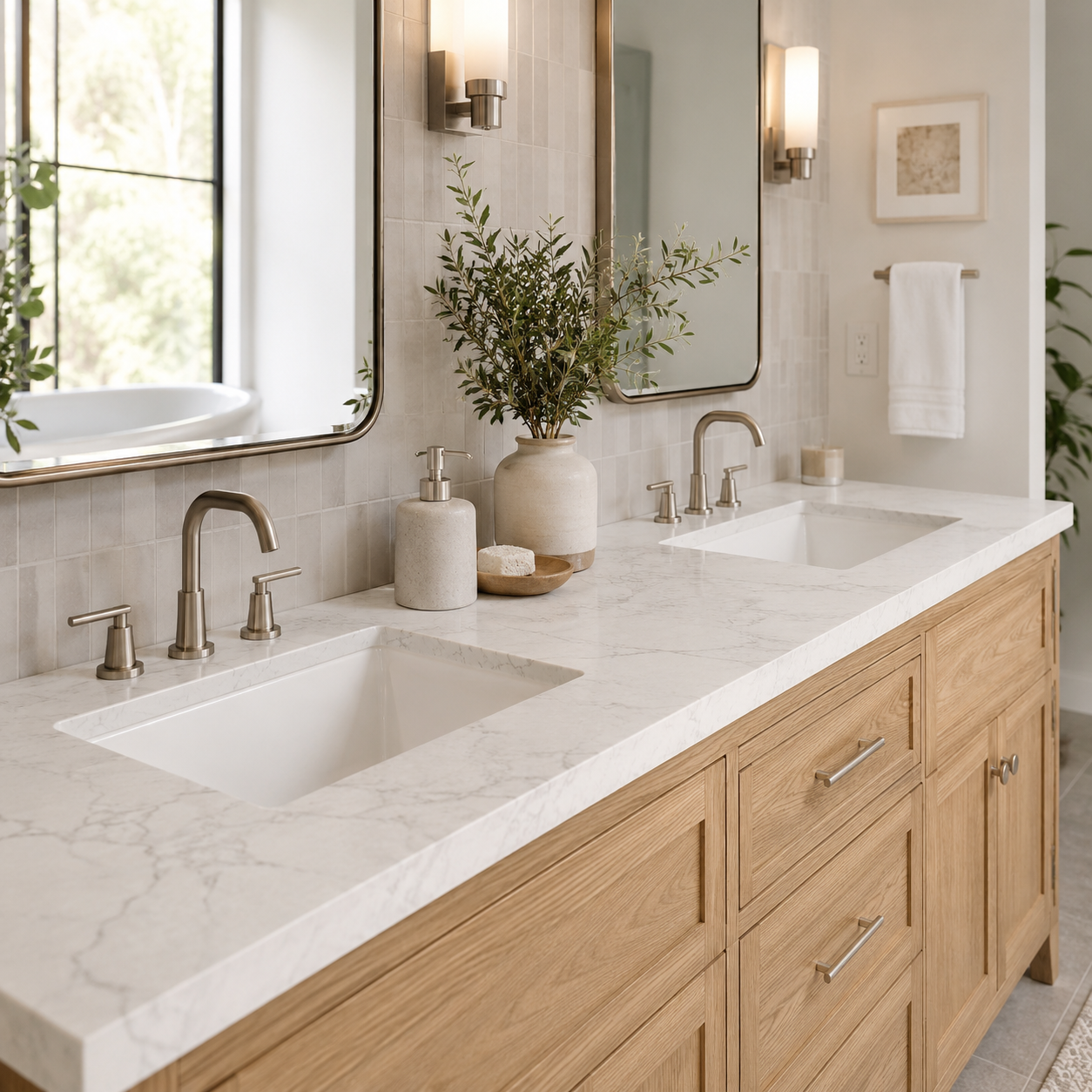
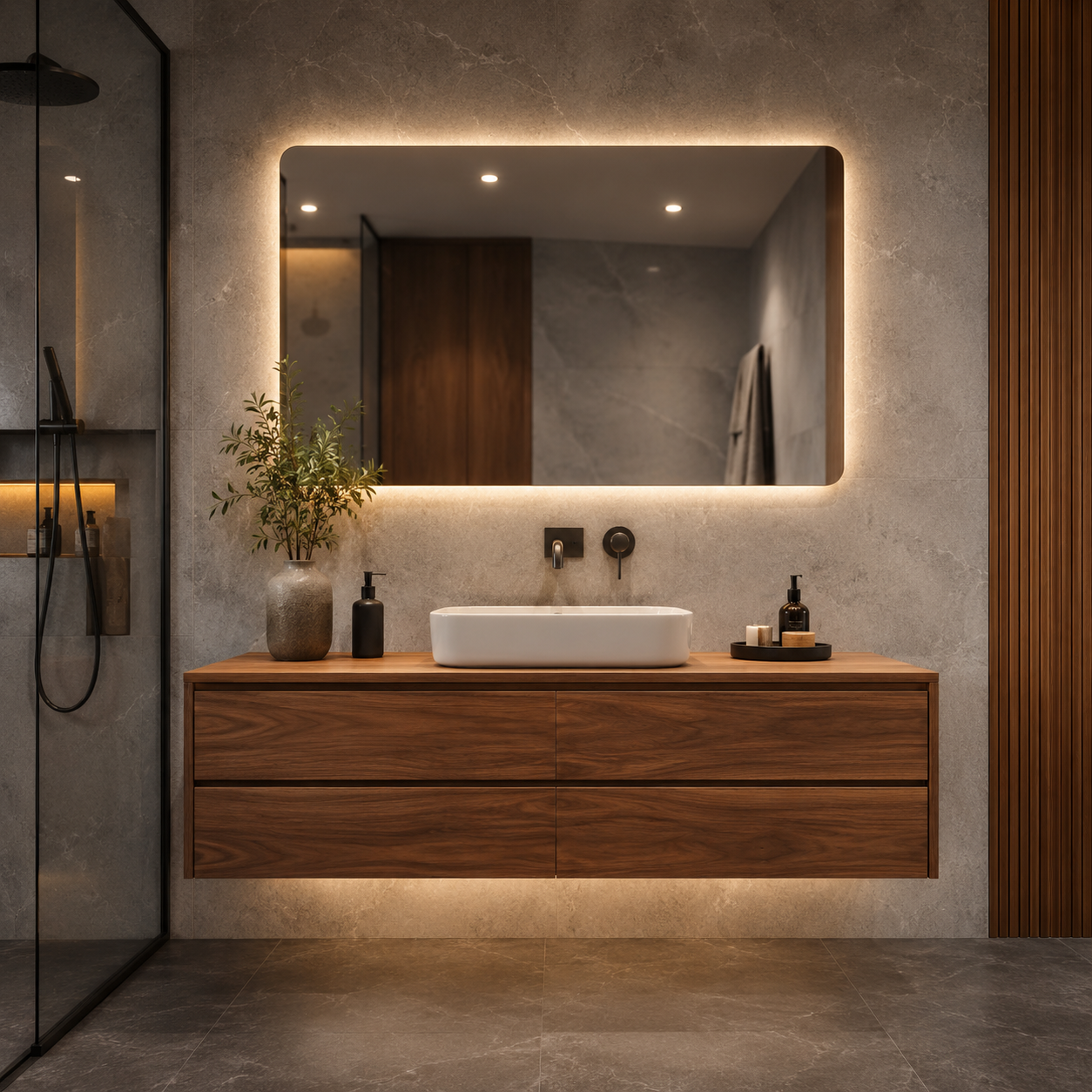
What this means for your project: If you love the organic warmth of wood, look for vanities with solid wood construction and fully sealed finishes that resist moisture penetration. Pair them with a low-maintenance countertop material that won't stain or etch. The Canyon Series offers warm wood tones that bring natural beauty to your space.

Lesson 2: "Live-In Remodels" Are Marriage Testers
One Reddit post went viral for its brutally honest title: "Would not recommend full bathroom remodel with a pregnant wife and a toddler". The homeowner spent nine months and over $20,000 on a DIY renovation—double his original budget.

The comments section exploded with recognition. One user joked that "toddlers are clearly not skilled at laying tile". Another discussion highlighted how renovation stress rarely affects only one person in a household—it spreads across family systems, causing couples to argue more frequently.
The real cost of DIY: Beyond the financial overrun, the homeowner admitted that the constant dust, noise, and disrupted routines took a toll on family life. One professional noted that a more involved remodel can affect water access, dust levels, noise, storage, and household flow in ways that make the process harder to manage.
What this means for your project: Time is not just money—it's sanity. Choosing pre-assembled vanities that arrive ready to install can shave days or even weeks off your project timeline. No complicated assembly. No sawdust in the living room. Just professional-grade quality out of the box.

Lesson 3: The Penny Tile Trap
Another homeowner's hard-earned wisdom: "Penny tile is a beast to work with. One and done for me...". While small mosaic tiles create a stunning vintage look, the reality is sobering. They're incredibly time-consuming to install, align, and grout—driving labor costs through the roof.
And the maintenance doesn't end after installation. Commenters warned that multi-seam floors require regular grout resealing, especially in high-traffic bathrooms. Those hundreds of grout lines are also prime real estate for mold and mildew.
What this means for your project: If you love the look of patterned or mosaic tile, consider using it as a feature wall rather than the entire floor. Pair it with a minimalist vanity—think clean lines, no excessive detailing—to let the tile shine without overwhelming the space. The Arco Series with its crisp, simple design provides the perfect visual anchor for busy tile work. And if you're set on penny tile flooring, budget for professional installation and ongoing maintenance.

Lesson 4: What's Hiding Under Your Old Vanity?
One Reddit user removed their old built-in vanity and found a nightmare: a raw concrete slab sitting 2-3 inches lower than the finished floor. The new vanity had legs, meaning the ugly gap would be fully visible.
The community came through with practical solutions:
-
Use pressure-treated wood sleepers to build up the floor
-
Apply construction adhesive around the perimeter
-
Install a plywood subfloor over the sleepers
-
Add a tile backer and new flooring to match the rest of the room
One commenter emphasized that since the sleepers sit directly on the concrete slab, pressure-treated lumber is non-negotiable to prevent rot and moisture wicking.
What this means for your project: Before you fall in love with a new vanity, know what's underneath your old one. If you're concerned about hidden floor issues, consider a vanity with a closed toe kick rather than exposed legs. This design completely hides any imperfections in the subfloor. Alternatively, a wall-mounted (floating) vanity bypasses floor issues entirely—just make sure your wall is properly reinforced.

Lesson 5: The Glass Is Too Small—And So Is the Developer's Conscience
A recent post on r/bathrooms highlighted a frustratingly common problem: developers installing a single small glass panel instead of a full shower door. The result? Water splashes everywhere, soaking bath mats and creating a slipping hazard.

One commenter cut through the design rhetoric: "The developer didn't install a glass door because it's cheaper. They just used 'minimalist' as an excuse to save money. When you buy a new home, make sure the developer completes it properly".
Another comment nailed the cultural moment: "The developer thought this was a good idea? We've truly reached the peak of 'aesthetics over function'—and it's absurd".
The practical reality: One commenter noted that this European-style open shower concept doesn't work well in many American homes, where the drainage slope and moisture protection simply aren't designed for that much water exposure.
What this means for your project: If you're dealing with a too-small glass panel, you have options:
-
Add a hinged glass flap to the existing panel (no drilling required)
-
Install a full frameless door for proper water containment
-
If replacing isn't feasible, position your vanity away from the splash zone and ensure your cabinet has moisture-resistant construction—solid wood with sealed edges, not particle board
The Common Thread: Smart Choices Save Headaches
Every one of these Reddit stories shares the same lesson: the decisions you make before the renovation start—materials, timeline, product selection—determine whether your project ends in triumph or regret.
At ECLIFE, we've designed our vanities to address the very concerns Reddit homeowners are discussing:
| Series | Key Feature | Why It Solves a Reddit Pain Point |
|---|---|---|
| Canyon Series | Warm wood tones, solid wood construction | Brings organic warmth without the maintenance headaches of raw wood countertops |
| Arco Series | Clean architectural lines, minimalist design | Provides visual anchor for busy tile work; works with any countertop material |
| Verve Series | Modern profiles, generous storage | Keeps countertops clutter-free—no more hunting for toiletries |
Your Summer Reno, Smarter
This summer's Reddit discussions confirm what many of us already suspected: the most successful bathroom renovations aren't the ones with the most expensive materials. They're the ones where homeowners made informed choices about materials, realistic plans for timelines, and smart investments in quality products that minimize future headaches.
Whether you're planning a full remodel or just replacing a tired vanity, learn from the thousands of homeowners who've been there before. Choose materials that balance beauty with durability. Plan for the unexpected—especially what's hiding behind your old cabinets. And above all, prioritize products that make installation simple and maintenance minimal.
Explore the Canyon, Arco, and Verve Series—built to handle real life, designed to look beautiful doing it.