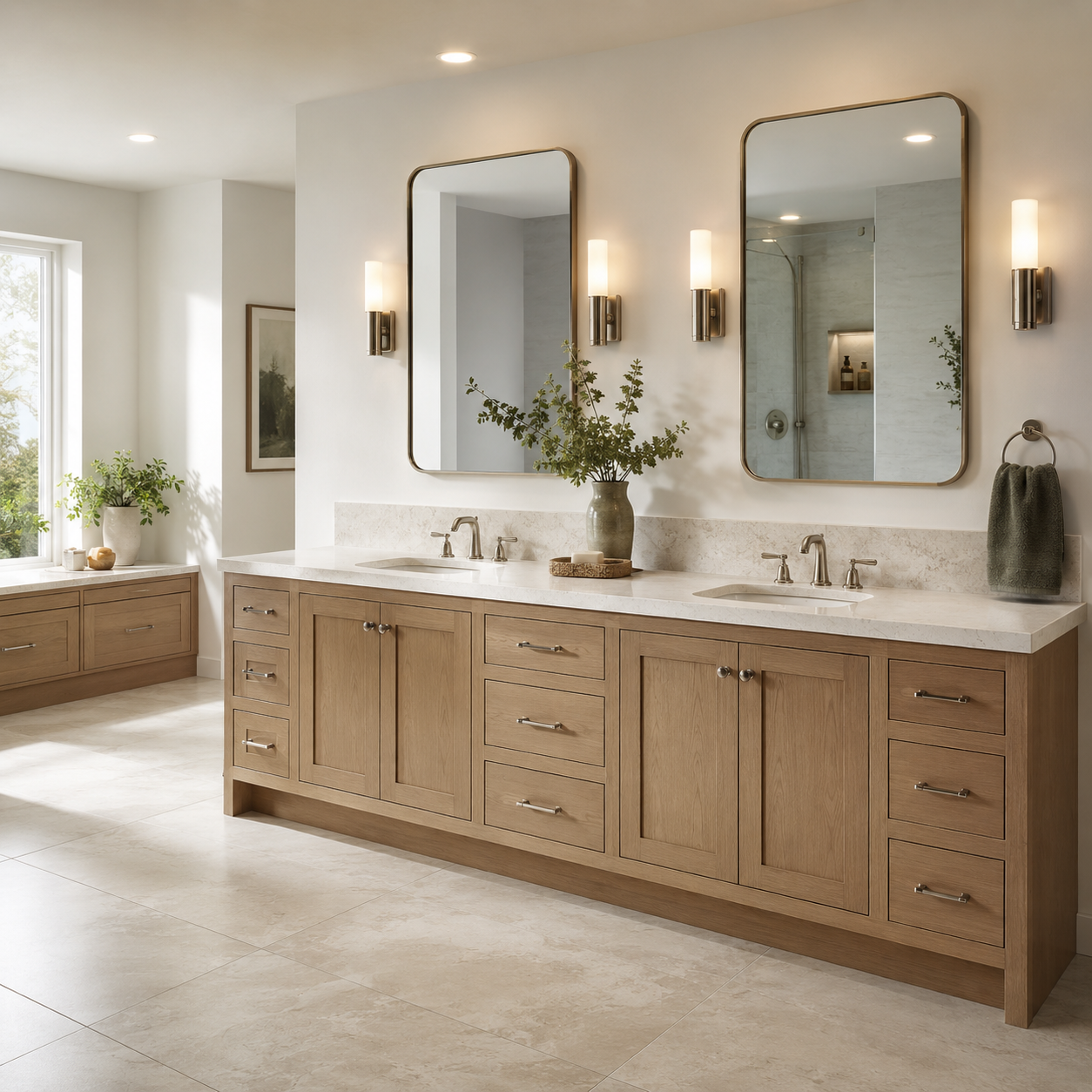




When selecting the centerpieces for a bathroom renovation, the debate between utility and aesthetics often focuses heavily on vanity countertop materials. While rustic wood countertops introduce undeniable organic warmth and texture, homeowners frequently warn about water damage, mold, and rot in damp environments. Conversely, classic marble exudes luxury but is highly susceptible to chemical etching from cosmetics and acidic cleaners. Finding the perfect balance between high-end style and daily maintenance is a crucial turning point for any remodel.
As a brand dedicated to providing one-stop bathroom solutions, **Eclife Premier** believes that countertop selection should balance aesthetic appeal with long-term functional expectations. To see how different materials perform together in professionally styled spaces, check out the Eclife USA Inspiration Gallery to find design layouts and coordinates that match your home's needs.
1. The Visual Warmth of Wood Countertops Against Moisture Challenges

Wood vanity tops offer a unique rustic charm that hard tile and stone cannot replicate. However, natural wood is highly vulnerable in high-humidity bathroom environments. Constant exposure to splashing water and moisture can lead to warping, splintering, and decay. To prevent structural rot, wood surfaces must be sealed with multi-layer, marine-grade polyurethane and regularly resealed. For high-traffic bathrooms used by families or guests, the ongoing maintenance requirements can easily become a major drawback.
2. The Elegance of Marble and the Risk of Etching and Staining
Marble countertops are synonymous with timeless luxury, displaying rich natural veining that elevates any master suite. Yet, marble is a soft, porous natural stone. It readily absorbs liquids, leaving behind stubborn stains from spilled makeup, hair dyes, or perfumes. Furthermore, acidic cleaners, lemon juice, or even certain soaps can cause chemical etching, which permanently dulls the polished surface. Keeping marble pristine requires strict cleaning habits and routine protective sealants.
3. Aesthetic Alignment: Coordinating Sink Colors and Top Textures

Once you choose a countertop material, pairing it with the correct basin style and color is essential for visual harmony. A stark white ceramic undermount sink provides a clean look but might clash with ultra-warm wood tones. On the other hand, matte black or concrete-style composite sinks offer bold contemporary styling but tend to highlight white soap scum and mineral deposits in hard-water areas. Selecting integrated basins helps minimize raw seams, streamlining both the visual line and daily wipe-down routine.
4. Seeking Durability: Modern Engineered Alternatives

For those seeking the beauty of natural materials without the associated headaches, modern alternatives deliver excellent performance. Quartz countertops are non-porous, highly scratch-resistant, and chemically stable, mimicking the detailed veining of marble without the need for sealing. To achieve the organic feel of wood safely, engineered plywood cabinets paired with highly durable exterior veneers provide the tactile comfort of white oak while resisting moisture swelling and structural shifts.
5. Commercial and Residential Selection Strategies

For commercial contractors and property managers (B2B clients), reducing post-installation service calls and callbacks is paramount. They benefit most from choosing low-maintenance, pre-fitted quartz countertops that speed up project turnaround times. For residential homeowners (B2C clients), blending textures—such as combining a highly water-resistant vanity body with a quartz top and integrating wooden shelving elsewhere in the room—delivers the desired design warmth while keeping moisture hazards away from wet areas.