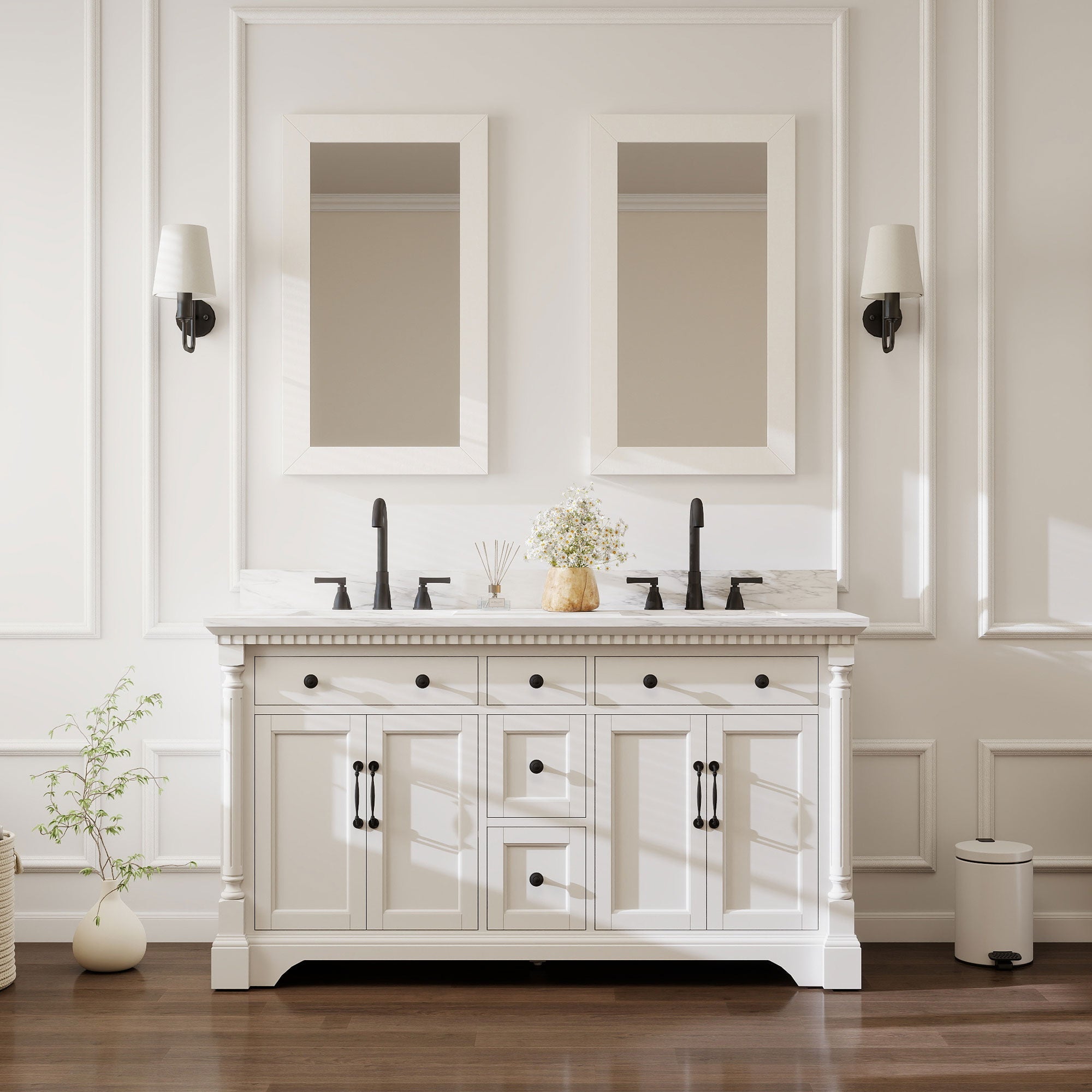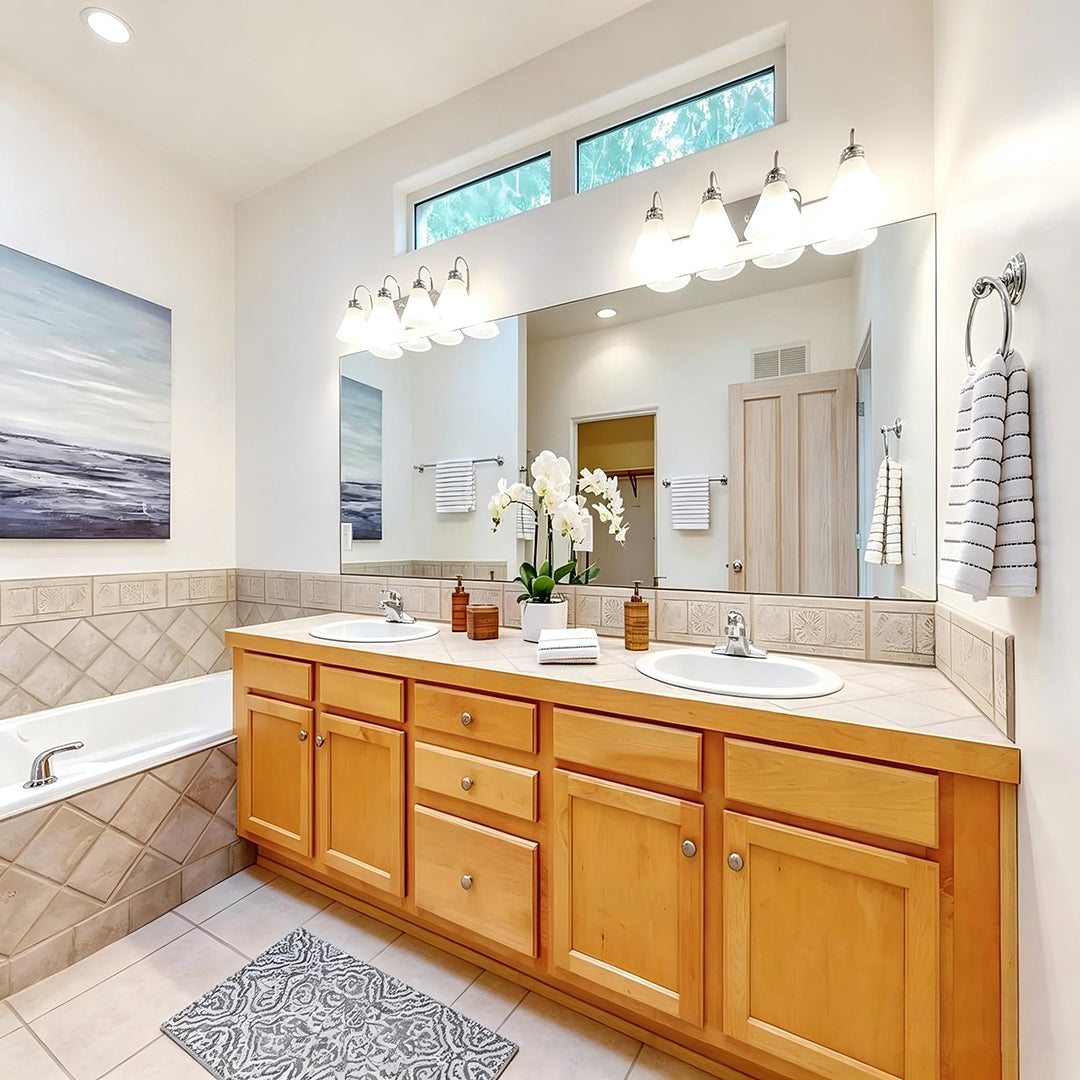




Bathroom vanity size matters, but the way a bathroom is used often matters more. A 48-inch single-sink vanity and a 60-inch double-sink vanity support two different routines: one prioritizes a concentrated personal workspace, while the other is designed to make shared use easier.
Instead of beginning with the question, “Which vanity is bigger?” begin with a more useful one: “Who uses this bathroom, and when?” The answer can reveal whether one well-planned sink or two separate wash areas will serve the household better.
Start With a Real Morning Routine
Think through a typical weekday morning. If the bathroom is usually used by one person at a time, one sink may be all that is needed. In that case, a more continuous countertop and centralized storage may be more useful than adding a second basin.
If two adults regularly get ready at the same time, a single sink can become a point of friction. A double vanity can reduce waiting, give each person a defined place for daily items, and make the routine feel less crowded.
The goal is not to add a feature for its own sake. It is to select a setup that reduces the specific friction points in the household’s daily routine.
When a 48-Inch Single-Sink Vanity Works Best

A 48-inch single-sink vanity is often a strong choice for bathrooms used primarily by one person at a time, households with staggered schedules, or rooms where continuous countertop space is especially useful.
With one sink, more of the countertop can remain available for toiletries, grooming tools, skincare, or other daily-use items. The cabinet can also support a centralized storage system rather than dividing the interior between two users.
A 48-inch single vanity may be the better fit when:
- Only one person typically uses the bathroom at a time
- Household schedules rarely overlap
- A continuous countertop is more useful than a second sink
- Storage is managed collectively rather than by separate users
- Existing plumbing is designed for one sink
A single-sink vanity is not a lesser version of a double vanity. For many bathrooms, it is simply the more efficient way to use the available space.
When a 60-Inch Double-Sink Vanity Makes Sense

A 60-inch double-sink vanity is most useful when two people genuinely need the bathroom at the same time. It can give each user a dedicated sink, a clearer share of the counter, and a more organized place for personal essentials.
This setup is particularly helpful in a shared primary bathroom, where two adults may be brushing teeth, washing up, or preparing for the day during the same time window.
A 60-inch double vanity may be the better fit when:
- Two adults routinely use the bathroom at the same time
- Waiting for the sink is a recurring problem
- Each person benefits from a separate area for daily items
- The bathroom can accommodate a wider cabinet without limiting circulation
- The plumbing plan supports two sinks
A second sink is valuable when it solves a real scheduling issue. If household routines rarely overlap, its practical benefit may be limited.
What a Second Sink Actually Solves
A second sink solves a simultaneous-use problem. It allows two people to brush teeth, wash their faces, or complete other sink-based tasks without one person waiting for the other.
It does not automatically solve every shared-bathroom issue. If both people need the mirror, outlets, lighting, or counter space at the same time, those elements should be planned separately. In some bathrooms, a wider mirror, better lighting, additional outlets, or a more thoughtful storage plan may address the real source of frustration more effectively.
Before choosing a double vanity, consider whether the household’s bottleneck is truly the sink. That distinction helps prevent unnecessary renovation scope.
One Continuous Counter or Two Personal Zones?
A 48-inch single-sink vanity and a 60-inch double-sink vanity distribute counter space differently. A single-sink layout often leaves a more continuous work surface, which can be useful for grooming tools, skincare, and everyday items.
A double-sink layout creates two more defined personal zones. Each user may have a smaller individual counter area, but the separation can make shared routines feel more orderly.
Neither approach is universally better. The choice depends on whether the household needs one flexible shared surface or two distinct daily-use areas.
Plan Storage Around What You Actually Use
Storage performance depends on more than cabinet width. Before selecting a vanity, list the items that need a home: towels, hair tools, extra toiletries, skincare products, cleaning supplies, children’s items, and electrical accessories.
A single-sink vanity can work well for centralized storage. A double vanity may be easier to organize by person, purpose, or frequency of use. In a shared bathroom, clear storage zones often make a bigger difference than simply having more cabinet doors.
Consider Plumbing Before Changing From One Sink to Two

Changing from a single sink to a double sink can require additional or relocated drain lines, water supply lines, and faucet connections. The scope depends on the existing plumbing, wall construction, floor conditions, and local requirements.
If a renovation does not include substantial plumbing work, retaining a single-sink configuration is often simpler. If the bathroom is already undergoing a full remodel and two people will share it long term, planning for double-sink plumbing may be worthwhile.
Layout Is Still the Final Constraint
This decision should begin with daily routine, but the bathroom layout remains the final constraint. Whichever configuration is selected, the room still needs usable clear floor space in front of the vanity and practical access to doors, the toilet, and the shower.
The National Kitchen & Bath Association recommends planning at least 30 inches of clear floor space from the front edge of a lavatory or other fixture to an opposing wall, fixture, or obstacle. Local code and accessibility requirements may differ, so confirm the requirements that apply to the project. Read the NKBA Bathroom Planning Guidelines.

Choose the Setup That Fits the Way You Live
A 48-inch single-sink vanity is often the more efficient choice for one-person or staggered use, centralized storage, and a more continuous countertop. A 60-inch double-sink vanity can be the better choice for two people who regularly share a primary bathroom and want to reduce waiting during daily routines.
For configuration references, explore the Verve 48-Inch Freestanding Single Vanity and the Verve 60-Inch Freestanding Double Vanity. The right option is not necessarily the larger one; it is the one that best supports the household’s actual routine.